TUNAP 987 SCR active system ingredient
TUNAP 987 SCR active system ingredient
SCR additive against crystal formation – TUNAP 987 SCR Active System Ingredient
Patent-pending anti-crystallization formulation that effectively protects urea dosing systems and SCR catalysts – ISO 22241-compliant, tested by SGS and APL. The proven SCR system solution for OEMs and workshops.
Crystal formation in SCR systems costs manufacturers and end customers real money
Modern diesel engines rely on SCR catalysts (Selective Catalytic Reduction) to reduce nitrogen oxide emissions (NO2). As a reducing agent, an aqueous urea solution (AdBlue®) is injected into the exhaust system and converted in the catalyst into elemental nitrogen (N2N) and water (H2O). Due to stricter emissions standards including real-driving tests, this technology is mandatory for all larger series-produced diesel vehicles.
The problem:
During predominantly short-distance driving and at low engine speeds, the temperatures required for complete conversion into ammonia are often not reached.
The result:
White crystal deposits form on the urea dosing system and the SCR catalyst. NO2 reduction deteriorates, emissions increase, and an engine start lock may occur, followed by repair costs in the four-digit range.
For OEMs, this means:
Warranty claims, complaints and an avoidable risk to customer satisfaction. For private brands, it is an opportunity to address a growing market need with a proven solution under their own brand. For workshops, it means time-consuming repairs. At the same time, it offers the opportunity to retain customers sustainably through preventive service and position themselves as a reliable partner.
The solution & innovation
987 SCR Active System Ingredient: patent-pending anti-crystallization formulation
TUNAP developed the 987 SCR Active System Ingredient specifically for regular use in SCR catalyst systems. The patent-pending formulation protects urea dosing systems and the SCR catalyst against crystal formation – and cleans existing deposits at the same time.
What matters most for manufacturers: the product works in compliance with manufacturer requirements, without affecting the standard conformity of the urea solution. This means it can be integrated into existing systems and service processes without concern.
Key innovation highlights at a glance:
- Protects urea dosing systems and SCR catalysts against crystal formation
- Cleans existing deposits and restores performance
- Standards-compliant: does not affect the urea solution’s conformity with ISO 22241
- No foaming when added to the urea tank
- Suitable for air-assisted dosing systems
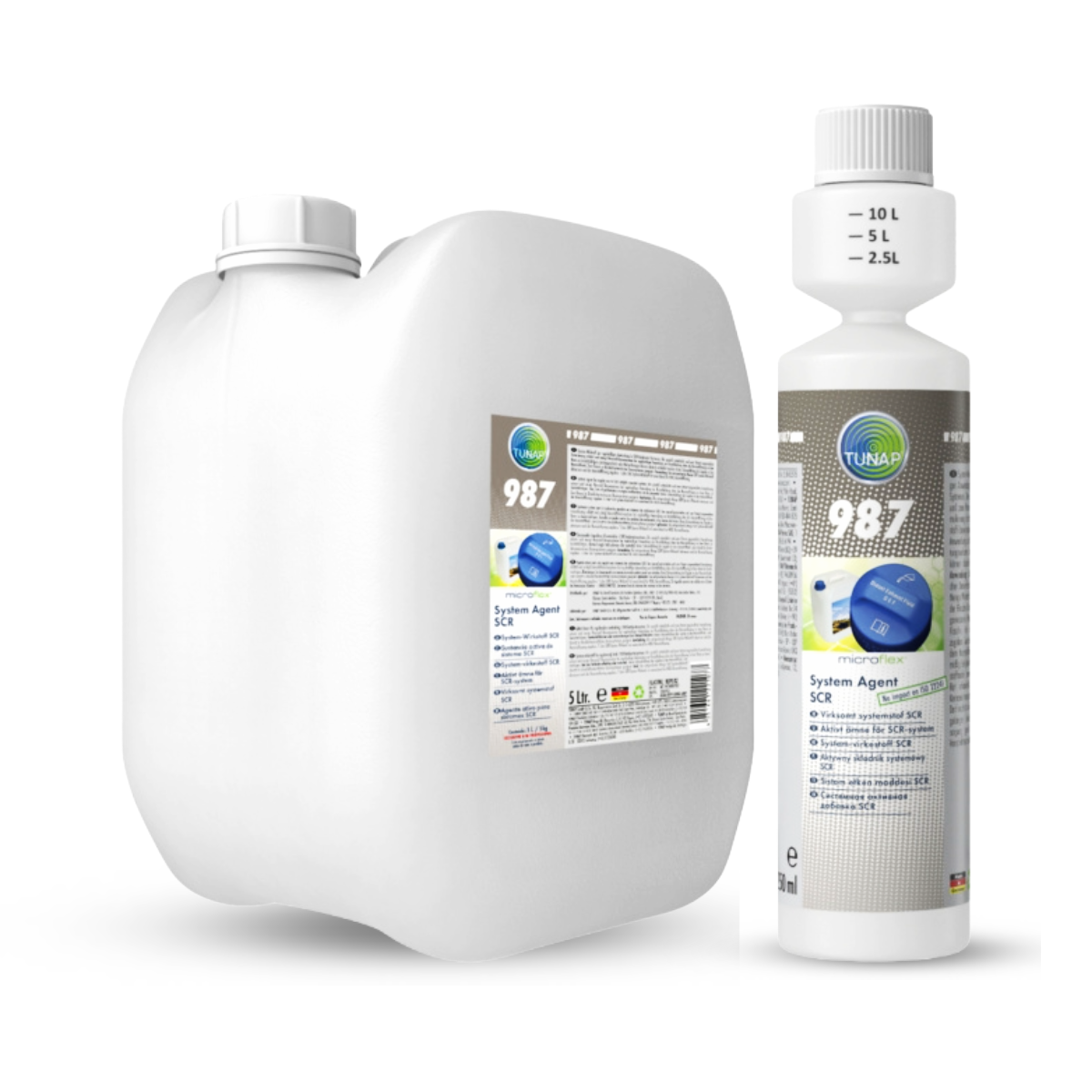
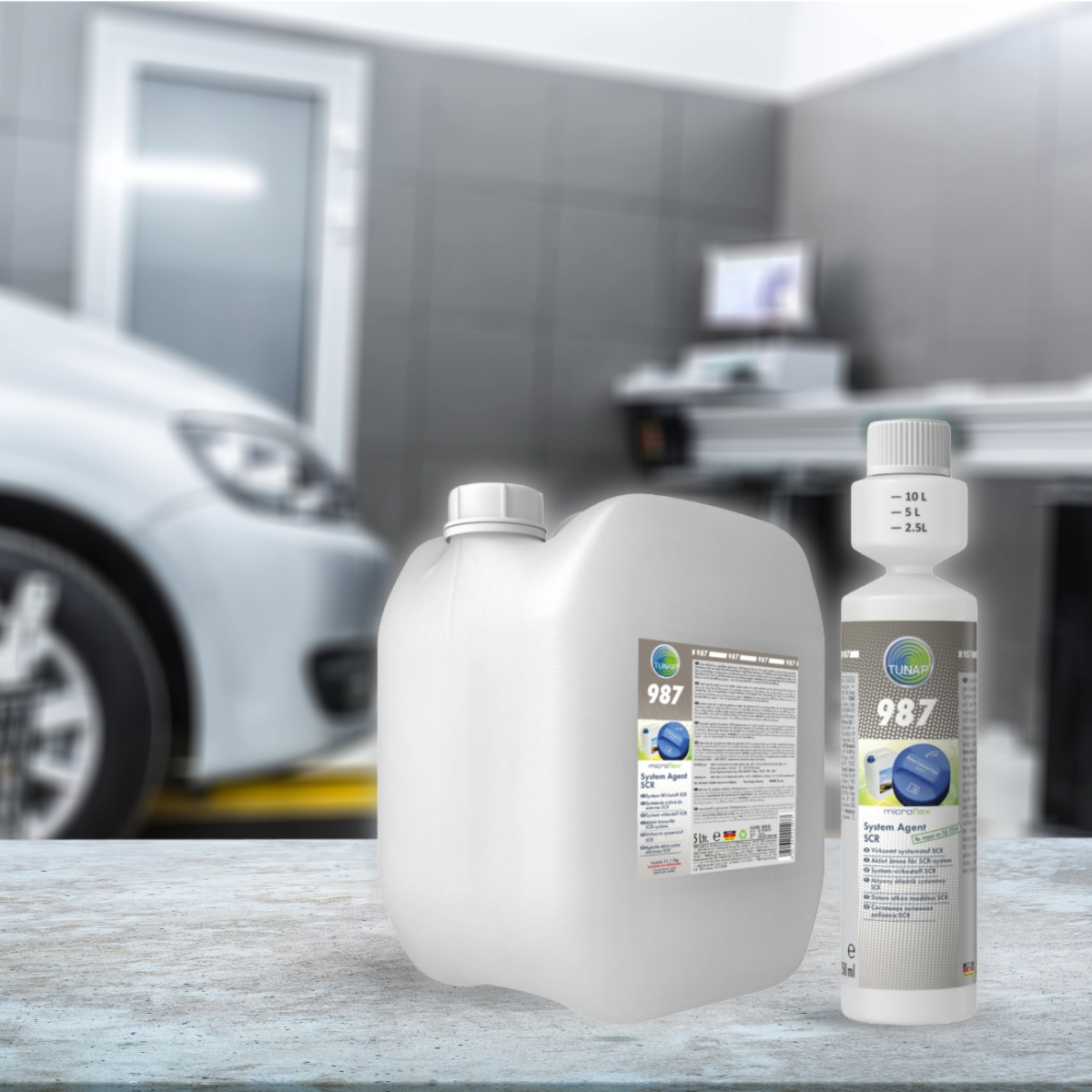
The TUNAP 987 987 SCR additive
Technical properties & verification
Tested performance – the data that matters for approval
| Feature | Property |
|---|---|
| Function | Protection against crystal formation and cleaning of existing deposits |
| Protection area | Urea dosing system and SCR catalyst |
| Standards compliance | Tested by SGS for compliance with ISO 22241 |
| Additional testing | Tested by APL |
| Patent status | Patent pending |
| Standards compatibility | Does not affect the urea solution’s compliance with standards |
| Foaming behavior | No foaming when added to the urea tank |
| System compatibility | No foaming when added to the urea tank |
| Dosage | 1:400 |
| Packaging | 250 ml (for 100 l of urea solution) · 5 l canister (for 2,000 l of urea solution) |
Benefits for OEMs, private brands, workshops and end customers
Cleans urea dosing systems and SCR catalysts whose performance is impaired by crystal formation
- Cleans urea dosing systems and SCR catalysts whose performance is restricted by crystal formation
- Prevents engine malfunctions and performance losses when used regularly
- Easy dosing thanks to the integrated dosing chamber in the dispenser bottle
- Protects end customers from expensive repairs – a strong sales and service argument
- Reduces complaint and warranty risks related to SCR malfunctions
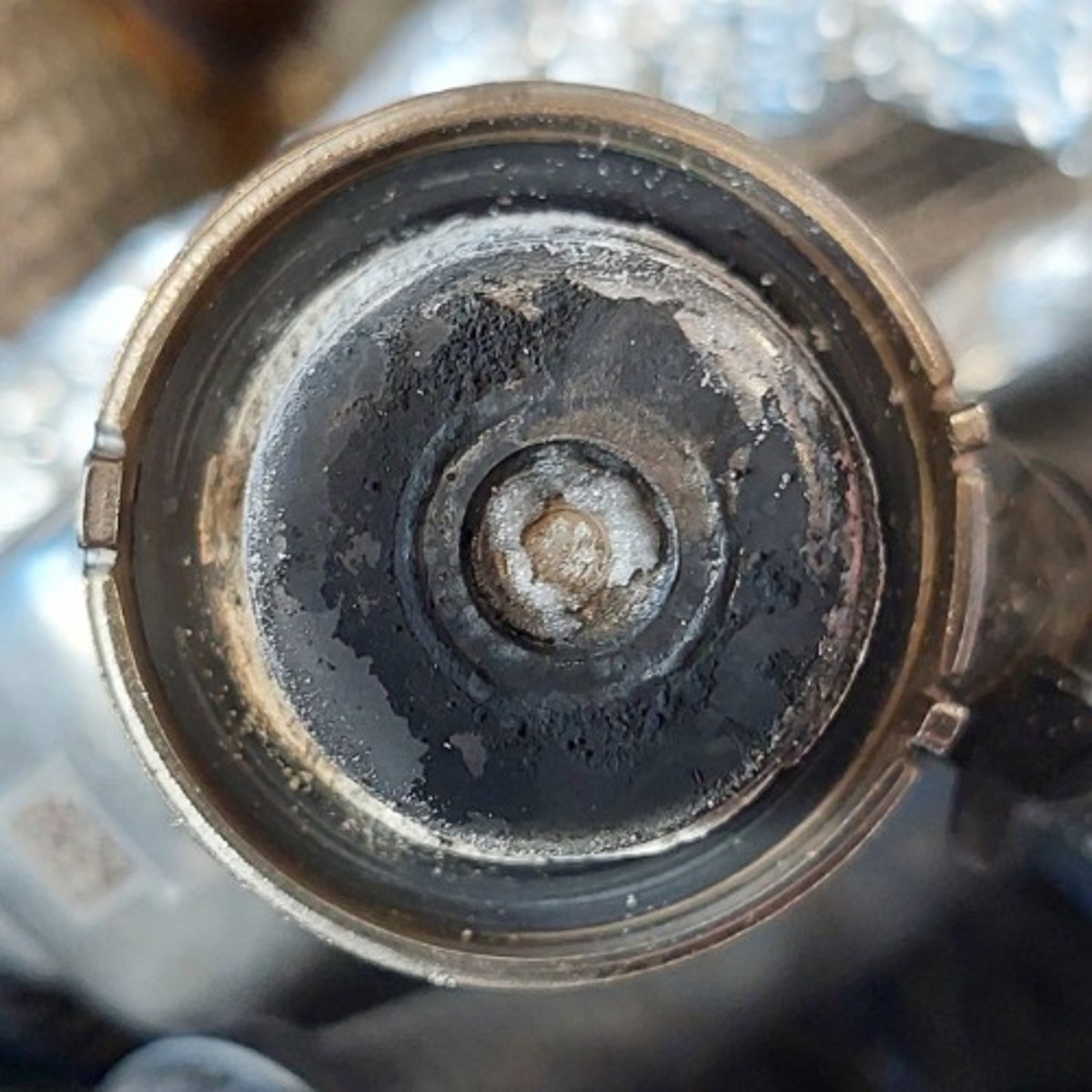
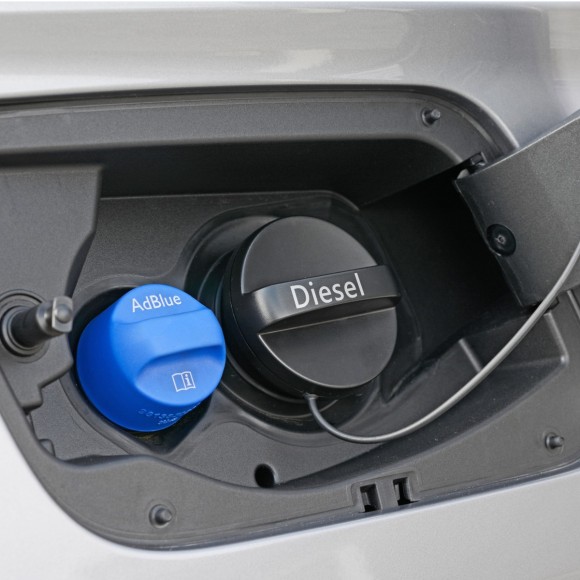
When TUNAP 987 SCR Active System Ingredient is used
For preventive use and at the first signs of crystal formation in the urea dosing system and SCR catalyst.
Crystal formation occurs in particular when the temperatures required for complete conversion into ammonia are not reached – for example during frequent short-distance driving and continuously low engine speeds.
Application – step by step
Using the SCR active system ingredient is this simple
- Check the scale: Read the scale in the dosing chamber of the dispenser bottle for the correct dosage.
- Dose: Squeeze the dispenser bottle to fill the dosing chamber with the required amount of active ingredient.
- Add: Pour the measured amount into the canister or bottle containing the urea solution, or directly into the tank containing the urea solution.
- Top up: When adding it to a canister or bottle, pour the mixture into the urea tank – use regularly, at least every time the urea tank is refilled.
Dosage note: One 250 ml bottle is sufficient for 100 l of urea fluid, and one 5 l canister for 2,000 l (dosage 1:400). The specified dosage should not be exceeded.
Frequently asked questions about the SCR additive against crystal formation
What is TUNAP 987 SCR Active System Ingredient?
A patent-pending anti-crystallization agent that protects urea dosing systems and SCR catalysts against crystal formation and cleans existing deposits – without affecting the urea solution’s conformity with standards.
How does crystal formation occur in the SCR system?
If the exhaust system does not reach the high temperatures required for complete conversion into ammonia – typically during short-distance driving and at low engine speeds – crystal deposits form on the urea dosing system and the SCR catalyst.
Is the product compliant with the international ISO 22241 standard that defines the specifications and requirements for AdBlue®?
Yes. The product has been tested by SGS for compliance with ISO 22241 and works in line with manufacturer requirements without affecting the urea solution’s conformity with the standard.
Is the additive suitable for air-assisted dosing systems?
Yes, TUNAP 987 SCR Active System Ingredient is suitable for use in air-assisted dosing systems and does not foam when added to the urea tank.
What is the dosing ratio for the additive?
The ratio is 1:400. One 250 ml bottle is sufficient for 100 l of urea solution, and one 5 l canister for 2,000 l.
Who is TUNAP 987 SCR Active System Ingredient intended for?
For OEMs that want to use a tested, standards-compliant anti-crystallization formulation. And for workshops that want to offer their customers simple, effective prevention against SCR malfunctions. OEMs can contact us via the relevant contact form, while workshops can order the product directly from the online shop. Available in a 250 ml bottle and a 5 l canister.
Do you have questions about our products, need advice or want more information?
Choose the contact channel that suits you best.

E-MAIL OR TELEFON
We are happy to advise you by phone or email.
tel: +49 (0)8171 1600 - 500